
Leading with Curiosity The Shift from Directives to Discovery
Highly controlling leadership is officially dead. In 2026, a company’s true competitive advantage isn’t found in a tech stack or a strategic roadmap; it resides in the ability to unlock it’s human potential. Visionary leaders are abandoning the rigid Performance Management framework of measurement and critique in favor of Performance Enablement. This shift transforms the leadership role from monitoring tasks into a catalyst for excellence, focusing entirely on empowering teams to reach their highest and most creative potential.
This transition defines the new era of the Manager as a Coach. This role is less about telling people what to do and far more about asking the right questions to help employees find their own creative ideas and solutions. The primary value a leader now provides is removing roadblocks rather than just assigning tasks. The goal is to build autonomy and confidence, not dependency.
To do this effectively, modern managers must embrace a coaching mindset. Instead of approaching a stalled project with a checklist of directives, a coach approaches it with curiosity. They understand that the highest performance occurs when an employee feels ownership over both the problem and the solution. This requires shifting from directive speech ("Here is what you need to go do") to collaborative questioning ("What do you see as the biggest barrier here, and how can I help you clear it?"). By making this shift, leaders move from being monitors of tasks to catalysts for team growth.
The GROW Model for Workplace Coaching and How to Apply This Today
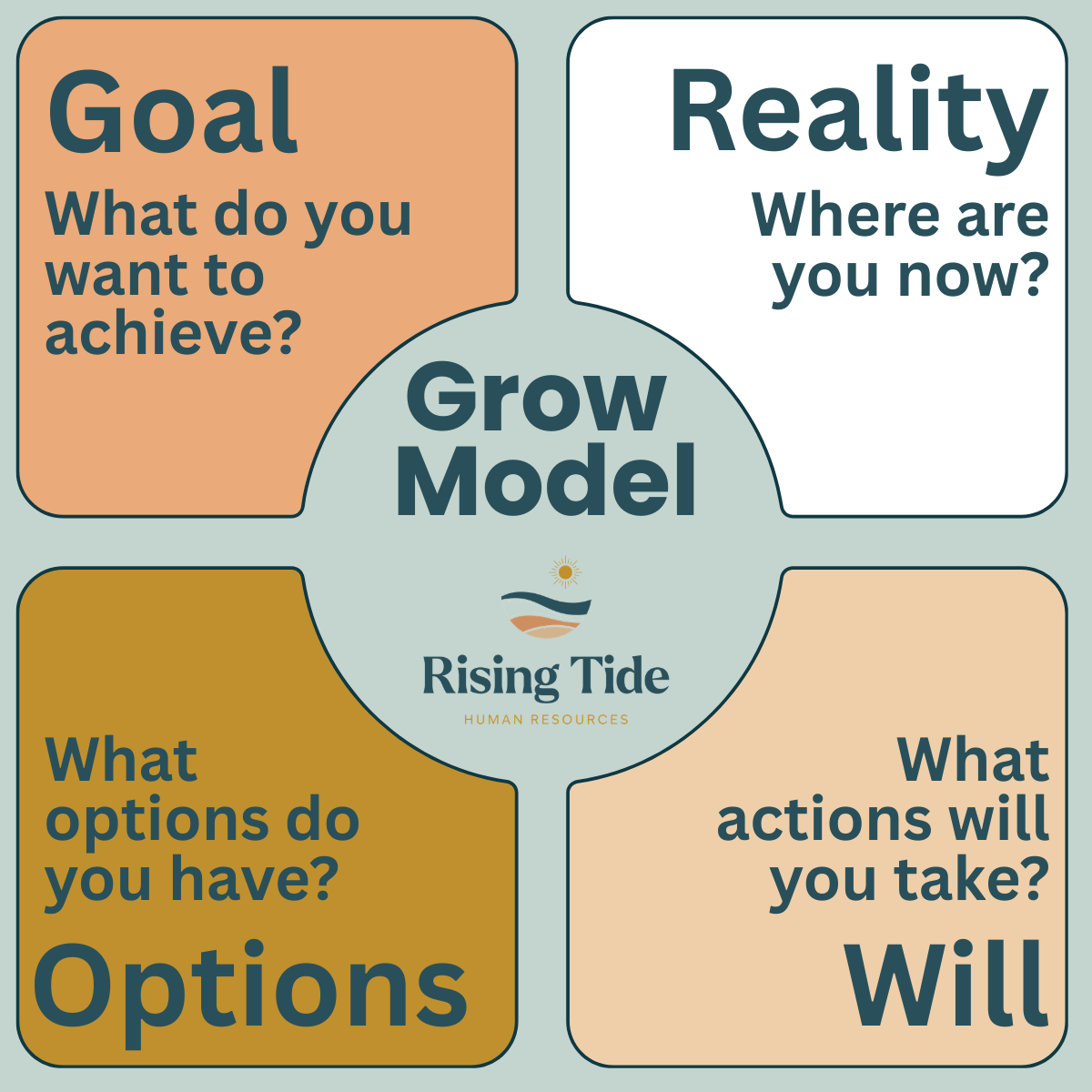
One of the most effective and simple frameworks for this type of coaching is the GROW Model. It provides a structured path for these enablement conversations.
The model is defined as:
G: Goal What do you want to achieve? This establishes the specific objective for the conversation or project. A manager asking this helps the employee focus on the desired outcome, not just the current activity.
R: Reality What is happening now? This focuses on exploring the current situation. The goal is clarity. A good manager helps the employee identify the current state of affairs, including the obstacles and challenges they are facing, without fear of criticism or judgement.
O: Options What could you do? This is the brainstorming phase, and my personal favorite! The manager’s role is to encourage the employee to generate as many alternative solutions or paths as possible. Crucially, the manager resists the urge to offer their own ideas first. Even just starting out with a simple, “what do you think we do?”, can solicit great conversation and gets ideas flowing.
W: Will What will you do? This final step focuses on commitment. The manager and employee define specific, time focused actions. The manager might conclude with, "How confident are you that you can achieve this?" This final question ensures the plan is possible.
The shift to performance enablement is more than a change in strategy; it is a commitment to your teams development and engagement that will drive the success of your business. By adopting the GROW model, you move from being a bottleneck to a support system. Start small by asking one curiosity-driven question in your next one on one and watch how quickly your team begins to lead themselves and leans less on you daily for direction.
